Dell PowerScale ushers in the holiday season with the release of OneFS 9.13, launched on December 16, 2025. This latest version introduces comprehensive enhancements across security, serviceability, synchronization, and protocol support, reinforcing PowerScale’s position as a unified software platform for both on-premises and cloud deployments.

OneFS 9.13 is designed for a broad range of workloads, including traditional file shares, home directories, and vertical applications such as media and entertainment, healthcare, life sciences, and financial services, as well as emerging use cases in generative AI, machine learning, deep learning, and advanced analytics.
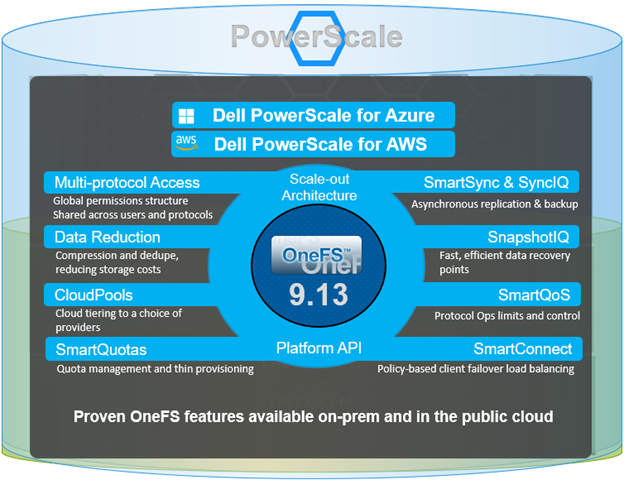
PowerScale’s scale-out architecture offers deployment flexibility across on-site environments, co-location facilities, and customer-managed instances in AWS and Microsoft Azure, delivering core-to-edge-to-cloud scalability and performance for unstructured data workflows.
Recognizing the critical importance of security and resilience in today’s threat landscape, OneFS 9.13 introduces advanced features to enhance data protection, monitoring, and availability.
Protocol Enhancements: The release includes significant improvements to the S3 object protocol, featuring fast-path functionality for optimized multipart upload completion times. Administrators can now reconfigure the S3 HTTPS port from the default TCP 443 to any port within the range of 1024–65,535 via WebUI or CLI, with warnings provided if port 443 is already in use by the PowerScale HTTP service.
Data Management: OneFS 9.13 delivers SmartSync enhancements for incremental file-to-object replication, supporting multiple policies per bucket and improved telemetry for cloud replication jobs. Cloud tiering capabilities are expanded through CloudPools URI support for Amazon VPC endpoints, enabling more secure and efficient cloud integration.
Security: To strengthen ransomware protection and secure data paths, OneFS 9.13 introduces TLS 1.3 support for HTTP transport within Apache-based services, including RESTful Access to Namespace (RAN), WebDAV, and WebHDFS components. TLS 1.3 is now enabled by default across these interfaces.
Usability: The release provides official support for the PowerScale SDK, offering tools, documentation, and code samples for developers to build applications that interact with PowerScale clusters. The SDK includes Python bindings for programmatic access to OneFS APIs, simplifying integration with both the Platform API (pAPI) and RESTful Access to Namespace (RAN).
Support and Licensing: OneFS 9.13 introduces Dell Dynamic Licensing, a modern licensing framework that eliminates manual activation, supports appliance, hybrid, and cloud deployments, and enables seamless asset movement between clusters without licensing friction. This replaces traditional key-based licensing for PowerScale.
Hardware Innovations: On the hardware front, OneFS 9.13 adds support for 400Gb Ethernet connectivity on the all-flash PowerScale F910 platform and introduces in-field backend NIC swap capabilities for previous-generation all-flash platforms, including F900, F600, and F200 storage nodes, plus the B100 and P100 accelerator nodes.
With these advancements, OneFS 9.13 delivers enhanced security, operational simplicity, and performance scalability, making PowerScale an ideal solution for organizations managing diverse and demanding unstructured data workloads across hybrid and multi-cloud environments.
In summary, OneFS 9.13 brings the following new features and functionality to the Dell PowerScale ecosystem:
| Area | Feature |
| Platform | · 400Gb Ethernet support for PowerScale F910 front-end and back-end networking.
· In-field support for back-end NIC changes for F900, F600, F200, B100, and P100 |
| Protocol | · S3 multi-part uploads.
· S3 port configuration. |
| Security | · HTTP transport layer security TLS 1.3 enhancements. |
| Replication | · SmartSync incremental file to object enhancements. |
| Support | · Dynamic cluster licensing. |
| Usability | · Software developer kit (SDK) official support. |
We’ll be taking a deeper look at OneFS 9.13’s new features and functionality in future blog articles over the course of the next few weeks.
Meanwhile, the new OneFS 9.13 code is available on the Dell Support site, as both an upgrade and reimage file, allowing both installation and upgrade of this new release.
For existing clusters running a prior OneFS release, the recommendation is to open a Service Request with to schedule an upgrade. To provide a consistent and positive upgrade experience, Dell is offering assisted upgrades to OneFS 9.13 at no cost to customers with a valid support contract. Please refer to Knowledge Base article KB544296 for additional information on how to initiate the upgrade process.